The Curaçao Rif Mangrove Park: boardwalk, kayaks and fees
A mangrove forest a short walk from the cruise pier, with a boardwalk over the water and channels you can paddle. Hours, fees and tour times from the park itself.
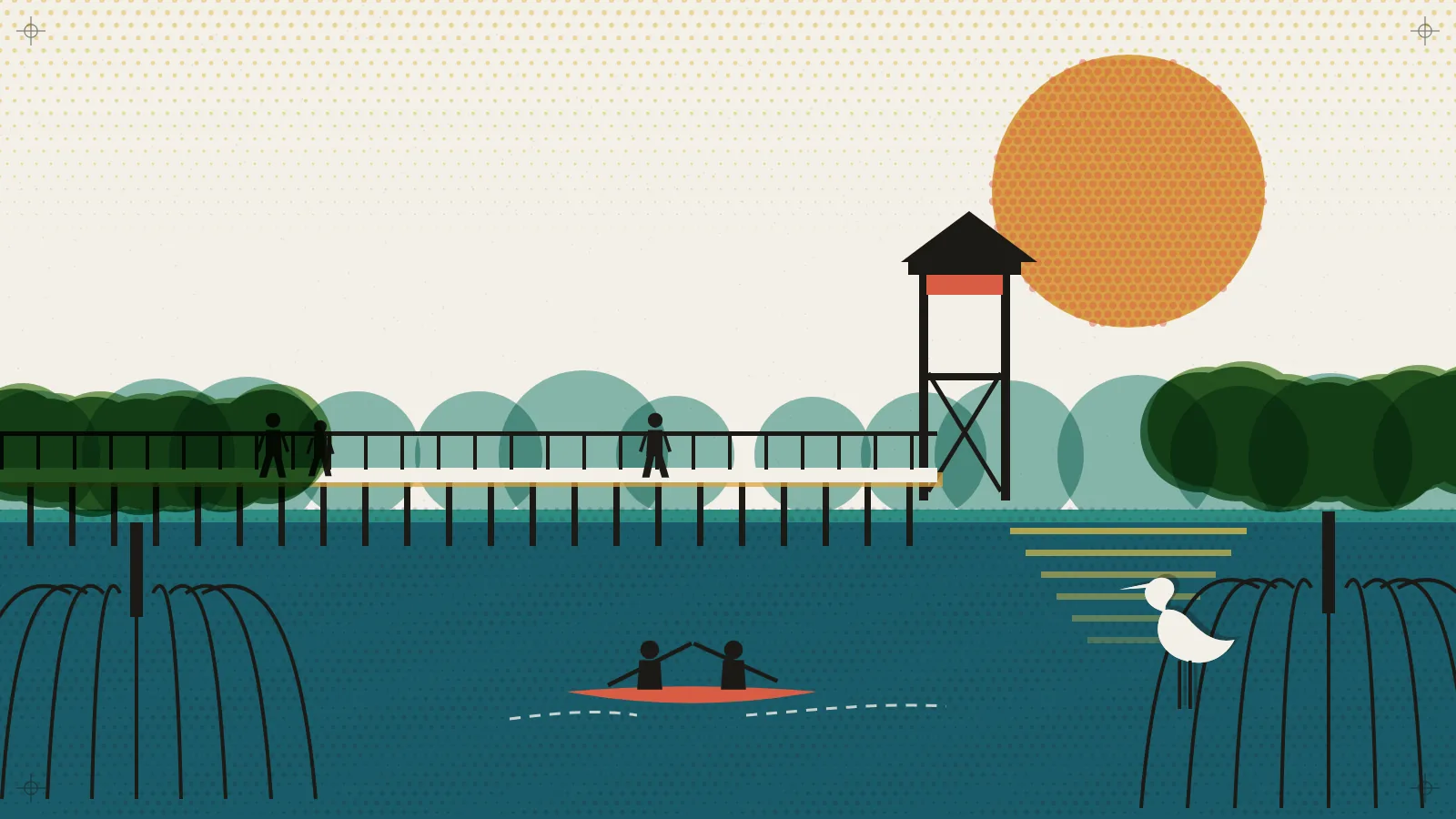
Most of Curaçao's nature asks for a drive to the west end. The Rif Mangrove Park asks for a short walk from the cruise pier. It is a city park of mangrove forest on the edge of Otrobanda, with a boardwalk above the water, a lookout tower and narrow channels you can paddle through. An hour here shows you a side of the island that the beaches and the painted quay do not.
This note gathers what you need for the visit: hours, fees, the tour times and the rules, all taken from the park's own website and from Carmabi, the foundation that runs it. Where the park's pages disagree with each other, we say so.
The park at a glance
| What | Published detail |
|---|---|
| Open | Every day, 08:00 to 17:00 |
| Last entry | 16:30 on the fees page, 16:00 in the FAQ |
| Where | Gouverneur van Slobbeweg, Otrobanda, opposite the second cruise terminal |
| Run by | Carmabi, open to the public since 1 July 2022 |
| Boardwalk | About 1.08 km, elevated, wheelchair accessible |
| Contact | +599 9 513 1681, info@mangrovepark.org |
Where it is, and what it is
The park sits in the Rif area of Otrobanda, right next to the Mega Pier, between the Courtyard Marriott and the Corendon Mangrove Beach Resort. Its contact page gives the address as the Gouverneur van Slobbeweg, opposite the second cruise terminal. If you are walking from Punda, you cross St. Anna Bay first; our note on the Queen Emma Bridge and the free ferry covers that part.
The whole site covers approximately 12 hectares in two basins. The eastern basin, about 6 hectares, is the part in use today. The park says the two basins will later be joined by a canal and a visitor centre will be built. It opened to the public on 1 July 2022 and is managed by the Carmabi Foundation, which describes the park's work as nature conservation, education and visitor recreation in equal measure.
Why a mangrove forest matters here
The park explains its own purpose plainly: mangroves provide food and shelter for marine animals, serve as nursery grounds for many of them, and protect the coast in a storm. Carmabi's press kit calls it the only public mangrove park on the island. Walking the boardwalk, you are looking at a working nursery, not a garden.
Three ways to see it
On the boardwalk, at your own pace
The elevated boardwalk runs for about 1.08 km through the forest, with benches, viewpoints, information signs and an observation tower. The signs cover the history of the Rif Otrobanda area, the mangrove ecosystem and its conservation. The park says the boardwalk is accessible to wheelchair users, with bridges where it crosses the kayak channels. For more depth on your own, the park offers an audio tour through the Pocket Guide app, with a code from the ticket office.
With a ranger, on foot
Guided walks with a park ranger leave at 08:30, 10:00, 12:30 and 14:00. They suit anyone who wants the mangroves explained rather than only seen.
By kayak, through the channels
Guided kayak tours leave at 09:00, 10:30, 12:30, 14:00 and 15:30. You must be 6 or older, and the park asks you to reserve upfront by email. The kayak rules are sensible and worth reading before you go: life jacket on at all times, stay seated, mind your head under the bridges, and do not touch the roots or the wildlife.

Fees
These are the rates on the park's opening hours and fees page. Resident rates are in Caribbean guilders and need a sèdula.
| Ticket | Visitors | Locals living abroad | Residents (sèdula) |
|---|---|---|---|
| Adults | $15.00 | $6.00 | CG 2.00 |
| Children 6 to 12 | $2.00 | Not listed | CG 2.00 |
| Children under 6 | Free | Not listed | Free |
| Guided walking tour | $20.00 | $8.75 | CG 8.75 (children CG 5.00) |
| Guided kayak tour | $25.00 | $15.00 | CG 15.00 (children CG 7.50) |
What you might see
The park grows three kinds of mangrove, black, white and red, along with the buttonwood that usually keeps them company. Red mangroves are the ones standing on arching prop roots; closer to the coast you will see green and brown algae.
Birds are the main show. The park lists cattle egrets, snowy egrets and the white heron, black necked stilts, the yellow warbler and the protected brown pelican, plus migrants in season. Its FAQ adds frigate birds and the kaweta di patu. On the ground and in the trees, look for the bloublou, a native lizard. In the water, Carmabi's press kit mentions fish, crabs and young marine species using the roots as a nursery.
Since 29 March 2025 the park has also shown an interactive exhibition on the marine plants and animals printed on the new Caribbean guilder banknotes, told by the rangers and open during regular hours.
Rules worth knowing before you go
The park's regulations are short. The ones that catch visitors out:
- No pets, no drones, no music, no smoking or alcohol.
- Stay on the boardwalk and do not climb or lean on the railings.
- No swimming or fishing, and no touching, feeding or disturbing the animals.
- Children under 13 must be with an adult, and there is no lifeguard.
- Take nothing out of the park but photographs.
How busy does it get?
Carmabi's press kit gives 17,766 visitors in 2023, up 21% on 2022, of whom 12,475 were tourists. Spread over a year, that is a quiet park, which is much of its appeal. The park also holds open days with free entry; in 2026 one fell on 2 July. Keep an eye on the park's site for the next one.
Practical notes
- Go early or late. The first walking tour leaves at 08:30, and the last kayak tour at 15:30, so you can avoid the middle of the day.
- Check holiday hours. The park posts adjusted opening hours around holidays on its hours page.
- Combine it with Otrobanda. The park is a short walk from the old town, so it fits between a morning in the city and lunch.
Plan the rest of your visit
If you are flying in, start with our step by step guide to the Digital Immigration Card. For a second piece of the island's nature that stays close to town, our note on the Hato Caves covers the limestone caves near the airport. Further west, the Christoffel National Park hike and Shete Boka National Park make a full day. The front page has the whole collection and the essentials.
Good to know
What are the opening hours of the Curaçao Rif Mangrove Park?
The park publishes daily hours of 08:00 to 17:00. Its fees page gives the last entry as 16:30 and its FAQ page as 16:00, so plan to arrive before 16:00.
How much does the Mangrove Park cost?
For visitors, the park lists $15 for adults, $2 for children aged 6 to 12 and free entry under 6. A guided walking tour is $20 and a guided kayak tour is $25. Residents with a sèdula and locals living abroad pay lower published rates.
Do I need to book the kayak tour?
The park asks you to reserve kayak tours in advance by email at info@mangrovepark.org. Kayakers must be 6 or older, and children under 13 must be with an adult.
Is the Mangrove Park wheelchair accessible?
Yes, according to the park. Its elevated boardwalk, about 1.08 km long, is accessible to wheelchair users, with bridges where the boardwalk crosses the kayak channels.
Where is the Mangrove Park?
In Otrobanda, Willemstad, on the Gouverneur van Slobbeweg opposite the second cruise terminal, between the Courtyard Marriott and the Corendon Mangrove Beach Resort.
Sources
Checked on 2 November 2026. Hours, fees and rules can change without much notice, so confirm with the official source before you go.
- Curaçao Rif Mangrove Park: Opening Hours and Fees
- Curaçao Rif Mangrove Park: FAQ and Regulations
- Curaçao Rif Mangrove Park: home page (location, size, history, boardwalk)
- Curaçao Rif Mangrove Park: Activities and Trails
- Curaçao Rif Mangrove Park: Nature and History
- Curaçao Rif Mangrove Park: Contact
- Carmabi: Mangrove Park press kit (2023 visitor figures)
- Carmabi, 1 April 2025: New tour at Curaçao Rif Mangrove Park
- Carmabi, 24 June 2026: Curaçao Rif Mangrove Park invites public to free Open Day on July 2